Table of Contents
- The Global Wellness Real Estate Revolution
- Brazil: Latin America's #1 Wellness Economy
- What Makes a "Wellness Development"?
- Terrá Jurerê: A Case Study in Wellness Real Estate
- How to Evaluate the Wellness Premium
- International Comparison: Florianópolis vs Global Wellness Destinations
- The Digital Nomad And Wellness Buyer Profile
- Frequently Asked Questions
1. The Global Wellness Real Estate Revolution
Wellness real estate has moved from a niche luxury label into a serious product category. Instead of looking only at location, square footage and generic amenities, buyers are paying more attention to how a home affects routine, rest, stress, mobility and long-term quality of life.
Global references such as the Global Wellness Institute point to a large and fast-growing category. Those numbers signal category demand; they are not unit-level price forecasts for Florianópolis.
What's driving this category growth? A convergence of powerful macro trends:
- Post-pandemic health awakening: COVID-19 fundamentally shifted how people value their living environments. The home evolved from mere shelter into a sanctuary for physical and mental health.
- Remote work liberation: With geographic constraints removed, professionals can now prioritize lifestyle over proximity to offices—and they're choosing properties that actively support wellbeing.
- Aging global population: As boomers age into their 60s and 70s with significant accumulated wealth, health-conscious living has moved from nice-to-have to essential.
- Quantified wellness: Wearables and health tracking have made the connection between environment and wellbeing measurable—and buyers increasingly demand spaces designed with this evidence in mind.
- Millennial and Gen Z priorities: Younger generations often view wellness not as indulgence but as part of quality of life, which can affect product preference and liquidity.
Market Reality Check: According to the Global Wellness Institute, wellness real estate has evolved from representing less than 1% of new residential construction in 2015 to over 15% in 2025—a 15x increase in market share in just one decade.
The category has matured beyond early experiments. Major markets in the United States, Europe, and Southeast Asia now feature wellness-certified developments, and standards such as WELL and Fitwel have helped buyers understand what is real design substance and what is only marketing.
Brazil, and especially Florianópolis, deserves attention because the city already combines nature, beach lifestyle, healthcare access, technology, gastronomy and year-round livability. The best projects turn those attributes into a product with coherent price, contract and liquidity.
2. Brazil: Latin America's #1 Wellness Economy
When buyers think "wellness destinations," they often picture Bali, Costa Rica or Portugal's Algarve coast. Brazil enters at a different price point and gives buyers a fresh product and location comparison.
The data tells a compelling story:
- Brazil's wellness economy was valued at $438 billion in 2023 and is projected to reach $913 billion by 2028—more than doubling in five years.
- Brazil ranks #1 in Latin America and #4 globally in total wellness economy size, ahead of France, Italy, and Canada.
- The country boasts over 350 natural thermal springs, a 7,400 km coastline with year-round beach access, and the world's largest tropical rainforest—natural assets that would be impossible to replicate elsewhere.
- Brazilian wellness tourism grew 127% from 2020 to 2025, vastly outpacing global averages.
Purpose-built wellness residences remain relatively rare in Brazil. The strongest properties combine that scarcity with location, developer execution, sound SPE structure, the right unit type and clear exit liquidity.
Why Florianópolis Specifically?
Within Brazil, Florianópolis stands out for wellness-oriented real estate:
- Climate: Subtropical with mild winters (15-20°C) and pleasant summers (25-32°C)—comfortable year-round without the oppressive heat of northern Brazil.
- Nature access: 42 beaches within the island municipality, Atlantic rainforest reserves, lagoons, and hiking trails create an inherently biophilic environment.
- Infrastructure: Unlike many Brazilian beach destinations, Florianópolis has reliable utilities, fiber internet, an international airport, and well-maintained roads.
- Economic base: A diversified economy anchored by technology, tourism, and government (state capital) provides stability.
- Educational institutions: Two major universities attract educated residents and create a culture receptive to evidence-based wellness concepts.
- Urban comfort: Significantly lower crime rates than Rio, São Paulo, or Salvador make it appealing to families and retirees.
See wellness properties in Florianópolis
Get current units, prices, floor plans and SPE payment terms directly from Elisa.
See properties and pricesThe city government has also shown progressive attitudes toward sustainable development, implementing green building incentives and protecting coastal ecosystems—creating a regulatory environment favorable to wellness-focused construction.
3. What Makes a "Wellness Development"?
The term "wellness real estate" gets thrown around loosely, often applied to any property with a gym and pool. But genuine wellness developments are defined by a systematic, evidence-based approach to how built environments affect human health.
Here are the core elements that distinguish true wellness real estate:
Neuroarchitecture: Design Based on Brain Science
Neuroarchitecture applies neuroscience research to architectural design, creating spaces that measurably affect mood, stress levels, cognitive function, and behavior. Key principles include:
- Ceiling height variation: Higher ceilings in social spaces promote creative thinking; lower ceilings in private areas create feelings of security.
- Natural light optimization: Maximizing daylight exposure supports circadian rhythm regulation, improving sleep quality and reducing depression.
- Acoustic design: Sound-absorbing materials and spatial layouts minimize noise pollution, which research links to elevated cortisol and cardiovascular risk.
- Color psychology: Strategic use of colors proven to affect emotional states—earth tones for grounding, blues for calm, greens for restoration.
- Spatial flow: Layouts that encourage movement and social connection while providing options for privacy and retreat.
Biophilic Design: Nature Integration
Biophilic design stems from the biophilia hypothesis—humans' innate affinity for nature. Properties incorporating biophilic elements show measurable improvements in resident stress levels, productivity, and satisfaction:
- Living walls and green terraces: Vegetation visible from every unit, not just common areas.
- Natural materials: Stone, wood, and earth-based finishes rather than synthetic alternatives.
- Water features: Fountains, reflecting pools, and thermal circuits that provide visual and auditory connection to water.
- Natural ventilation: Design that maximizes cross-breezes and reduces reliance on mechanical air conditioning.
- Nature views: Windows positioned to frame greenery, water, or sky rather than neighboring buildings.
Thermal Water Circuits: The European Spa Tradition
One of the most distinctive features of high-end wellness real estate is the thermal water circuit (circuito de águas)—a concept borrowed from European spa culture but still rare in the Americas.
A complete thermal circuit typically includes:
- Heated pools (32-36°C): Promotes muscle relaxation and joint mobility
- Cold plunge pools (10-15°C): Stimulates circulation, reduces inflammation, boosts immune function
- Saunas (dry heat): Cardiovascular conditioning, detoxification
- Steam rooms (wet heat): Respiratory benefits, skin hydration
- Relaxation areas: Heated loungers, daybeds, meditation spaces between thermal experiences
The health benefits of regular thermal circuit use are well-documented: improved cardiovascular function, reduced chronic pain, better sleep quality, and significant stress reduction. Yet until recently, access to such facilities required expensive spa memberships or resort visits.
What creates real product value
Authentic wellness infrastructure separates a project from generic luxury buildings. Compare the entry price, amenity operating cost and target demand to see whether that differentiation creates value for the unit.
4. Terrá Jurerê: A Case Study in Wellness Real Estate
Understanding wellness real estate in the abstract is one thing. Seeing it executed in Florianópolis is another.
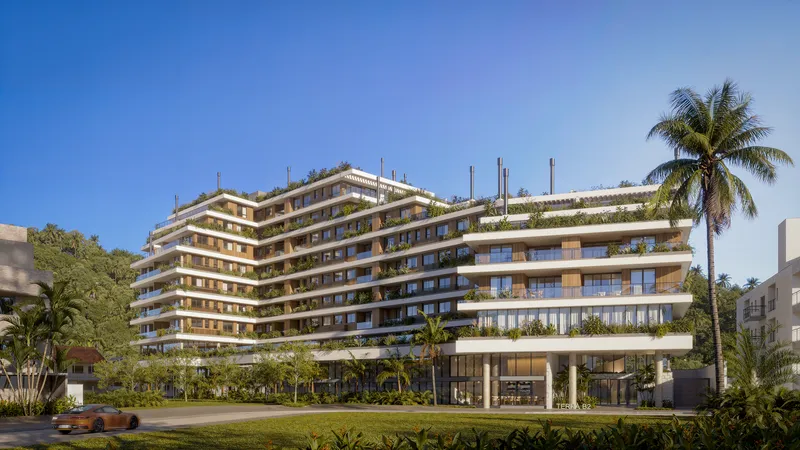
Terrá Jurerê brings wellness into the architecture of a residential project in Jurerê. Bárbara Schumacher Studio developed the concept through neuroarchitecture, biophilic design and phenomenology, connecting water, greenery, movement and social spaces throughout the building.
The Wellness Infrastructure
Terrá Jurerê turns wellness into visible spaces that residents can use throughout the day:
- Heated pool, spa and hydromassage for water-based leisure and recovery
- Dry sauna and steam room integrated into the wellness circuit
- Green terraces and gardens woven into the architecture
- Fitness and multipurpose spaces for training, yoga, Pilates and dance
- Coworking and social spaces that bring work and daily life into the same address
- Children's areas connected to greenery for family use
The Commercial Thesis
Terrá Jurerê combines wellness infrastructure, a Jurerê address and a cost-price SPE structure. Compare its current prices, construction budget, CUB adjustment and payment flow with completed units in the area.
- Quota 407: 1 bedroom, 47.63 m², no parking, R$554,695.96
- Other Terrá units: one, two and three-bedroom options with current prices and terms available on request
Comparable wellness properties in established markets:
- Wellness Living, Nashville, USA: 1-bedrooms from $380,000
- Aqualiving, Lisbon, Portugal: 1-bedrooms from $420,000
- Serenbe, Atlanta, USA: 2-bedrooms from $550,000
Those international comparisons frame the category. The Florianópolis purchase becomes compelling when entry price, product standard and target demand support one another.
Terrá Jurerê
Wellness architecture in Jurerê with a heated pool, spa, sauna, green terraces, movement spaces and coworking. Compare current units and payment terms.
See Terrá units and payment terms →5. How to Evaluate the Wellness Premium
The product case for wellness real estate is compelling. The buying question is more practical: does a specific unit earn its wellness premium?
Evaluate comparable properties, replacement cost, target buyer profile, rental rules, operating costs and liquidity instead of assuming wellness automatically creates a better financial outcome.
Market Premium As A Hypothesis
Some international studies and wellness-certified projects report stronger price perception versus conventional comparables. Treat that as a hypothesis to test locally, not a unit-level forecast.
- Is the premium supported by location and product quality, or only by marketing language?
- Does the target buyer actually value the wellness features enough to pay more?
- Will amenities increase condominium costs in a way that affects resale or rental demand?
The strongest case appears when wellness is not decorative. Thermal circuits, garden areas, natural light, acoustic comfort, coworking and hospitality services need to connect with the lifestyle of the buyer or guest.
Scenario Discipline
Build a scenario with explicit inputs instead of assigning fixed future values to two properties:
- Entry price: current price, payment flow and construction adjustment.
- Comparable ready product: what similar completed units trade for today.
- Rental scenario: nightly rate, occupancy, seasonality, decoration, property management, taxes and condominium rules.
- Exit scenario: likely buyer profile, liquidity by typology and market cycle at delivery.
A strong buying decision uses numbers that can be challenged and updated: price, payment flow, operating cost, rental demand and resale liquidity.
Key Insight: Wellness can improve the story, usability and perceived quality of a project. It still needs due diligence. A beautiful concept does not replace price discipline.
6. International Comparison: Florianópolis vs Global Wellness Destinations
How does Florianópolis stack up against established international wellness real estate markets?
| Market | Price per m² | Rental Context | Infrastructure | Legal Security | Investment Risk |
|---|---|---|---|---|---|
| Bali, Indonesia | $3,000-6,000 | Market dependent | Developing | Moderate | Land ownership restrictions, political risk |
| Tulum, Mexico | $3,500-7,000 | Market dependent | Limited | Moderate | Infrastructure strain, environmental concerns |
| Algarve, Portugal | $4,000-8,000 | Market dependent | Excellent | High | High competition, mature pricing |
| Nosara, Costa Rica | $3,200-6,500 | Market dependent | Moderate | High | Limited inventory, seasonal demand |
| Florianópolis, Brazil | $1,800-5,500 | Scenario based | Very Good | High | Currency risk, early-stage wellness market |
Why Florianópolis Deserves A Closer Look
1. Entry Price Context: Florianópolis can offer lower entry prices than established international wellness destinations, but the comparison only matters when the project, location, contract and unit liquidity are comparable.
2. Rental Scenario: Short-stay demand can be relevant in Florianópolis, especially in beach and lifestyle neighborhoods. Model rates, occupancy, seasonality, costs and condominium rules to build the income scenario.
3. Infrastructure Without Compromise: Unlike emerging wellness destinations like Tulum or Bali where infrastructure often lags development, Florianópolis already has reliable utilities, fiber internet, modern healthcare, international schools, and an international airport with daily flights to São Paulo, Rio, Buenos Aires, and Santiago.
4. Legal Security: Brazil's real estate legal framework provides strong property rights, transparent titling systems, and equal treatment for foreign buyers—absent in some competing markets.
5. Market Stage: Florianópolis' wellness real estate sector is still early compared with more established destinations. That can create space for differentiated projects, but early markets also require more discipline around execution risk and resale evidence.
Buy a wellness property in Florianópolis
Receive available units, current prices, payment terms and a direct comparison of the projects.
See available properties7. The Digital Nomad And Wellness Buyer Profile
An emerging buyer profile is reshaping wellness real estate markets globally: remote workers who want a property that can serve as residence, seasonal base, wellness retreat and, in some cases, a rental asset with professional management.
This profile is particularly relevant to Florianópolis for several reasons:
The Earning-Spending Arbitrage
Digital workers earning in US dollars, euros, or British pounds enjoy significant purchasing power advantages when investing in Brazilian real estate:
- A property in Florianópolis may be more accessible for buyers earning in stronger currencies, depending on exchange rate, payment flow and taxes.
- Operating costs (property taxes, utilities, condo fees) are 60-75% lower than comparable US/European cities.
- Currency can strengthen or weaken the purchase, so model it as a scenario variable rather than a fixed advantage.
Year-Round Livability
Unlike seasonal wellness destinations (Tulum's unbearable summer humidity, Bali's monsoon season), Florianópolis offers comfortable year-round climate:
- Summer (Dec-Mar): 25-32°C, beach season, vibrant social scene
- Winter (Jun-Aug): 15-22°C, perfect for hiking, less crowded beaches, cultural events
- Shoulder seasons: Ideal conditions, lower tourist volumes
This year-round appeal can reduce dependence on a single high-season narrative, but occupancy still depends on unit quality, pricing, management, building rules and market demand.
Personal use plus rental: Compare the personal-use calendar, expected rates, management costs, taxes, condominium rules and reserve for low-demand months.
Choose your wellness property in Florianópolis
See current opportunities by unit, price, payment schedule, location and intended use.
Compare propertiesFrequently Asked Questions
Explore the opportunities in Florianópolis
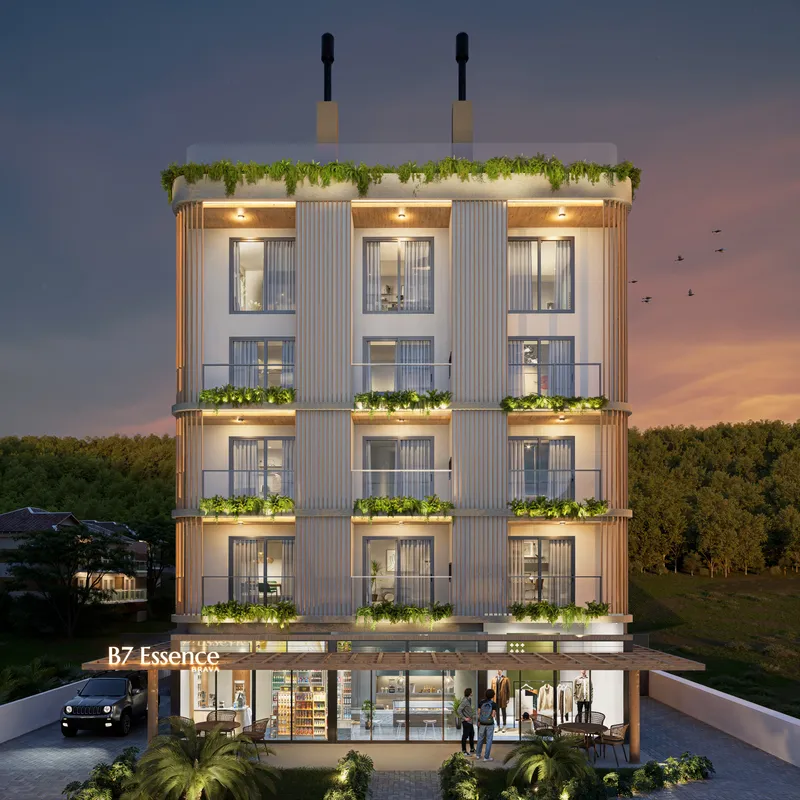
B7 Essence Brava
Praia Brava · Studios and lofts with a 10% down payment
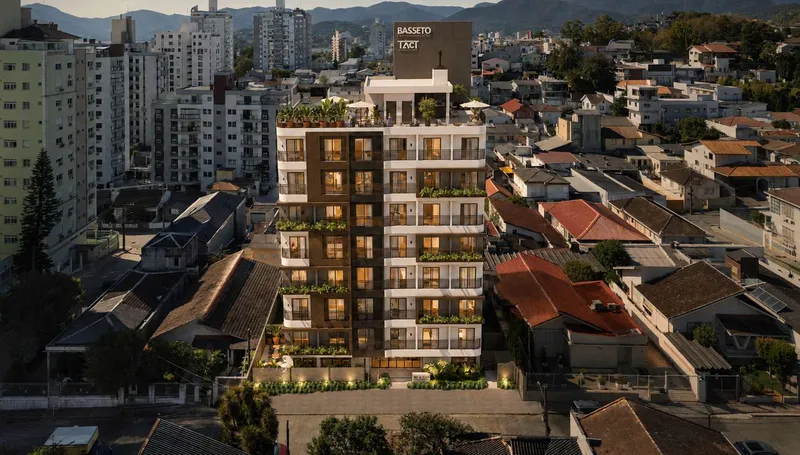
B7 Stay Agronômica
Agronômica · Studios and one-bedroom homes near Beira-Mar
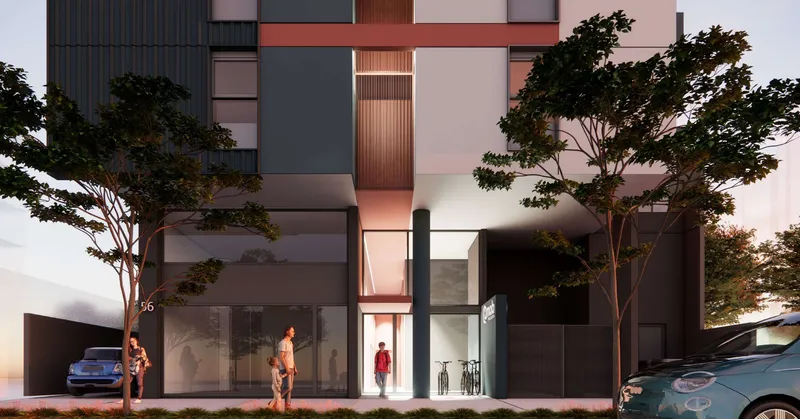
IMOB TRINDADE ON
Trindade · Studios with terraces and duplex lofts near UFSC
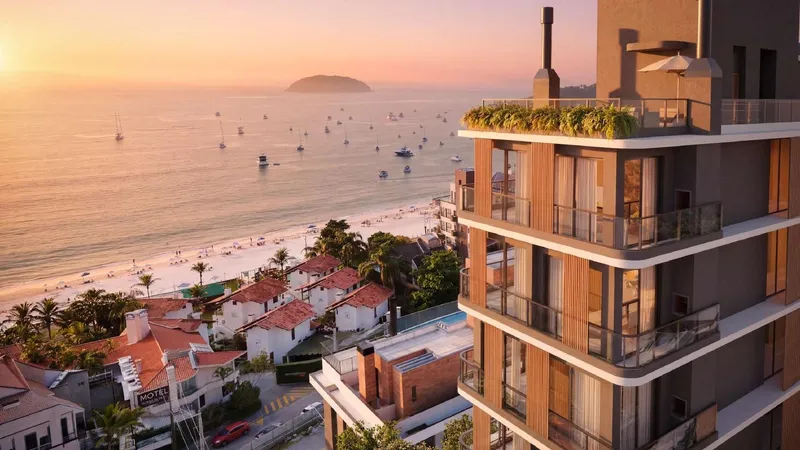
Apoena Studios Jurerê
Jurerê · Two studios available, 100 m from the sea
Terrá Jurerê
Jurerê · Wellness architecture and one-to-three-bedroom homes