Table of Contents
1. What is "Off-Plan" in Brazil?
In Brazil, off-plan properties are known as "imóveis na planta", literally "properties on the blueprint." Buyers enter before or during construction, use a staged payment schedule and compare the contract price with completed units.
Unlike ready-to-move properties, off-plan purchases involve buying based on architectural plans, 3D renderings, and model units. Construction typically takes 24-36 months, during which buyers make installment payments that are indexed to construction costs.
How Off-Plan Works in Brazil vs Other Markets
While off-plan purchases exist globally, Brazil's system has unique characteristics:
- SPE Structure: Most developments use a dedicated legal entity (Sociedade de Propósito Específico) that creates project-level separation and governance for buyers
- Cost-Price Model: Some projects price around construction cost plus a disclosed developer margin, rather than future resale value
- Extended Payment Terms: Typical payment spans 30-48 months with low down payments (10-20%) and no bank financing required during construction
- CUB Indexation: Payments adjust monthly based on official construction cost index (CUB), not general inflation
- Buyer Assemblies: SPE buyers have voting rights and receive monthly financial reports, creating transparency uncommon in other markets
Key Difference: In Brazil's SPE model, the buyer can enter closer to the project's cost structure than to the future resale price. The advantage appears when contract, budget, CUB assumptions, taxes and completed-unit sales support the gap.
The strongest opportunities align governance, pricing, delivery schedule and completed-unit comparables.
2. The SPE Model: Brazil's Unique Cost-Price System
The SPE (Sociedade de Propósito Específico) model is one of the main governance structures behind off-plan purchases in Brazil. Understanding it is crucial for foreign investors.
What is an SPE?
An SPE is a dedicated legal entity created exclusively for one real estate project. Think of it as a special-purpose company whose sole asset is the development under construction. Key features include:
- Legal Independence: The SPE is a separate legal entity from the developer, with its own CNPJ (Brazilian tax ID)
- Single Asset: The SPE can only own and develop one specific project — it cannot be used for other ventures
- Patrimônio de Afetação: Project assets are legally ring-fenced and cannot be seized by the developer's creditors
- Transparent Governance: Buyers become SPE members with voting rights and access to financial reports
Patrimônio de Afetação: Legal Ring-Fencing
The patrimônio de afetação (ring-fenced assets) provision, established by Federal Law 10.931/2004, is a key governance mechanism. Under this regime:
- All funds received from buyers must be deposited in dedicated bank accounts
- Funds can only be used for project-related expenses (construction inputs, labor, permits)
- The project's land, construction permits, and physical assets are legally separated from the developer's balance sheet
- If the developer goes bankrupt, project assets cannot be liquidated to pay the developer's other creditors
- Buyers can vote to elect a new administrator to complete construction
Why It Matters: During Brazil's 2014-2016 real estate crisis, multiple large developers declared bankruptcy. Projects with patrimônio de afetação had a clearer legal path for buyer assemblies and project-level administration, while projects without it faced more severe exposure.
Monthly Financial Reporting
SPE buyers receive detailed monthly reports including:
- Total funds received from all buyers
- Itemized construction expenses
- Physical construction progress (percentage complete by phase)
- Bank account balances
- Updated delivery timeline
This level of transparency is rare in international real estate and provides early warning of any issues.
RET Tax Regime Benefits
SPE projects using patrimônio de afetação qualify for Brazil's RET (Regime Especial de Tributação) tax treatment, which simplifies and reduces taxation:
- Single Tax Rate: 4% combined tax on gross revenue (replaces multiple federal taxes)
- Cost Transparency: Simplified taxation can reduce overhead when the benefit appears in the project budget and contract price
- Simplified Compliance: Reduced bureaucratic burden speeds project execution
Buyer Assembly Rights
As an SPE member, you have governance rights typically reserved for shareholders:
- Voting Power: Each unit owner gets votes proportional to their unit's value
- Assembly Meetings: Regular meetings (typically quarterly) to review progress
- Administrator Election: If needed, buyers can vote to replace the developer-appointed administrator
- Dissolution Rights: In extreme cases, buyers can vote to liquidate the project and receive prorated refunds
These rights can move you from a simple buyer into a more informed stakeholder, provided the contract, assemblies, reports, and legal structure are properly verified.
3. Potential Entry Advantage
The SPE cost-price model can create an entry-price advantage when the contract price sits below comparable completed inventory. Measure that gap with real completed-unit sales.
How Cost Price Changes the Purchase
In a cost-price SPE, buyer capital funds the development through the structure defined by its contract and construction budget. The advantage becomes visible when the unit, total price and payment schedule compete directly with other properties in the same area.
Project Example: Terrá Jurerê
Terrá turns that structure into a clear ladder of choices in Jurerê:
- Quota 407: 1 bedroom, 47.63 m², no parking, R$554,695.96
- Other Terrá units: one, two and three-bedroom options with current prices and terms available on request
Start with the unit: Quota 407 offers a one-bedroom Terrá unit at R$554,695.96. Other floor plans are compared by current price, parking, payment terms and intended use.
Why Some Projects Can Price Earlier
Off-plan projects compete through three concrete levers:
- Entry Price: Choose the unit and total capital before the building reaches its completed-product stage
- Payment Curve: Distribute capital across initial, monthly and scheduled contributions
- Product Difference: Buy a specific address, floor plan and amenity package instead of a generic market promise
Buying rule: The SPE model can align construction capital with transparent buyer governance. Contract, budget, schedule and comparable completed units determine whether the price delivers an advantage.
Current Examples and Historical Cases in Florianópolis
Current unit examples show how address, floor plan and product change the purchase price. Historical cases are identified clearly:
| Development | Entry Unit | Area | Total Price |
|---|---|---|---|
| B7 Stay Agronômica | Studio · quota 104 | 20.46 m² | R$306,222.04 |
| IMOB Trindade | Solarium studio · quota 106 | 31.46 m² total · no parking | R$379,873.63 |
| Apoena Studios Jurerê | Studio · quota 209 | 23.01 m² | R$680,818.71 |
| Ondara Residence | Case · former quota 329 | 38.71 m² · historical reference | 100% sold |
| Terrá Jurerê | 1 bedroom · quota 407 | 47.63 m² | R$554,695.96 |
Choose the address first. Agronômica and Trindade lead the compact urban segment. Ingleses and Canajurê bring the purchase closer to the beach. Jurerê adds wellness architecture and larger floor plans.
4. Market Upside and Due Diligence
Off-plan projects can offer upside when contract price, construction progress, neighborhood demand and completed-unit sales move in the buyer's favor. Measure it project by project instead of using a fixed target.
The Five Variables Behind Upside
- Contract Price: How the off-plan price compares with recent completed-unit sales in the same neighborhood
- Construction Stage: Whether the remaining delivery risk is fairly reflected in the price
- CUB Exposure: How construction-cost indexation may change the total amount paid before delivery
- Liquidity: Whether there is a realistic buyer pool if you need to resell or assign the contract
- Currency: How BRL/USD movement may affect an international buyer's real outcome
Why Price Movement Can Happen
When upside exists, it usually comes from several forces working together rather than from one simple promise:
- Reduced Completion Uncertainty: A unit near delivery usually carries less construction uncertainty than a unit at launch, but that difference must be reflected in actual buyer demand.
- Comparable Market Movement: Completed-unit prices can move during the construction period, especially in supply-constrained neighborhoods, but they can also stall or fall.
- Neighborhood Development: New services, access improvements, and amenities can improve desirability, but each location needs its own market read.
- CUB vs Resale Market: Installments may rise with construction costs while resale comparables move differently. Model both paths to measure the spread.
Buying Framework: Terrá Jurerê
Structure the purchase in three checkpoints:
Entry Review
Check: Contract price, payment schedule, CUB clause, assignment rules, and comparable completed units in Jurerê and Canajurê.
Construction Period
Check: Monthly reports, physical progress, budget variance, permits, delivery updates, and whether resale demand is still present.
Delivery Decision
Check: Final balance, financing availability, rental plan if relevant, taxes, liquidity, and whether holding or selling still fits your objective.
Buying rule: Compare potential upside with current market evidence and a downside scenario. Contract quality, CUB, delivery, liquidity, taxes and currency movement define the result.
What This Means for International Buyers
The useful question is not "how much will it go up?" The useful question is whether the project still looks disciplined after a full review of price, governance, contract, construction budget, delivery risk, exit options, and market liquidity.
5. Payment Structure in Practice
A cost-price SPE distributes capital throughout project formation. Terrá quota 407 shows the current structure in Brazilian reais.
Terrá Quota 407 Payment Schedule
Initial Contribution
Total: R$250,000
Payment: Initial contribution
Monthly Instalments
Schedule: 50 payments
Amount: See current schedule
Semiannual Contributions
Schedule: 8 payments
Amount: See current schedule
Total Position
Price: R$554,695.96
Unit: 47.63 m² · 1 bedroom · no parking
CUB Indexation Explained
Terrá instalments are adjusted by CUB/SC (Custo Unitário Básico), the construction-cost index used in the project schedule.
- Monthly Publication: SINDUSCON publishes the Santa Catarina index
- Construction Reference: CUB follows the cost base of the building sector
- Contractual Adjustment: The index applies to the contribution schedule under the SPE terms
- BRL Cash Flow: Initial, monthly and semiannual contributions remain denominated in Brazilian reais
One unit. One visible capital curve. Quota 407 combines a R$250,000 initial contribution with 50 monthly and 8 scheduled payments.
Choose the Capital Curve That Fits the Purchase
The active portfolio offers different ways to distribute capital:
- B7 Stay: Quota 104 is a 20.46 m² studio at R$306,222.04; request the current payment schedule
- Terrá Jurerê: Quota 407 combines a R$250,000 initial contribution with 50 monthly and 8 scheduled payments
- Apoena Studios Jurerê: Quota 209 is a 23.01 m² studio at R$680,818.71; request the current payment schedule
Start with total price. Then choose the payment rhythm. I will send you the available unit, floor plan and complete payment schedule.
6. Risk Assessment and Mitigation
Off-plan purchases carry construction, cost, market, currency and legal risks. Each one has a concrete verification step.
Primary Risks
🏗️ Construction Delays
Risk: Projects finish 3-6 months late due to weather, permit delays, or labor shortages.
Mitigation:
- Choose developers with track record of on-time delivery
- Verify all permits approved before contract signing
- Review monthly progress reports to catch delays early
- Contract typically includes penalty clauses for delays beyond 180 days
Reality Check: In Florianópolis, 70% of projects deliver within 6 months of estimated date. Delays are inconvenient but rarely catastrophic.
💰 Cost Overruns
Risk: Construction costs exceed initial budget, requiring additional buyer payments.
Mitigation:
- CUB indexation gives a transparent adjustment method, but it can increase your total payment
- SPE financial reports show real-time spending vs budget
- Patrimônio de afetação reduces misuse risk by separating project assets
- The contract should explain how overruns, budget changes, and buyer obligations are handled
Reality Check: Monthly reporting and CUB clauses improve visibility, but they do not replace a careful review of the budget and contract.
🏢 Developer Insolvency
Risk: Developer goes bankrupt before project completion.
Mitigation:
- Patrimônio de afetação: Project assets legally separated from developer's balance sheet
- Buyer assembly rights: Can elect new administrator to complete construction
- Creditor separation: Developer's creditors should not access ring-fenced project funds or land under the applicable rules
- Completion coverage: Some projects offer insurance or performance instruments, which must be reviewed in the contract
Reality Check: This structure was tested during Brazil's 2014-2016 crisis and can improve buyer leverage, but the specific legal documents still matter.
📉 Market Downturn
Risk: Real estate market declines during construction, reducing resale value or making an exit harder.
Mitigation:
- A verified entry-price gap may provide some cushion, but it should not be assumed
- Florianópolis limited supply (island geography) supports prices
- You may hold and rent after delivery if the unit, location, and regulations support that plan
- Long-term fundamentals (tourism, remote work migration) remain strong
Reality Check: Premium neighborhoods in Florianópolis have strong fundamentals, but short-term liquidity and pricing can still change with interest rates, supply, currency, and buyer demand.
💱 Currency Risk (For USD Investors)
Risk: Brazilian Real (BRL) depreciates against USD, reducing a USD-based buyer's outcome.
Mitigation:
- Model the purchase, installments, final balance, and possible exit in both BRL and USD
- Rental revenue after delivery, if part of the plan, will usually be BRL-denominated
- Keep a margin of safety for unfavorable exchange-rate periods
- Review tax and wire-transfer costs before sending funds
Reality Check: Currency can help or hurt. Model it explicitly instead of assuming the real estate market will offset it.
📋 Legal/Title Risk
Risk: Title issues or permit problems emerge after purchase.
Mitigation:
- All properties registered with Cartório (Registry Office) with chain-of-title verification
- Title insurance available through major insurers
- Lawyer review of SPE documents and permits before signing
- Verify environmental licenses (especially for beachfront properties)
Reality Check: Brazil's Cartório system is formal and document-heavy. A local lawyer should still verify title chain, permits, environmental constraints, and SPE documents.
Risk Mitigation Checklist
Before signing any off-plan contract, verify the following:
- ✅ SPE registered with valid CNPJ
- ✅ Patrimônio de afetação status confirmed
- ✅ All construction permits approved (Alvará de Construção)
- ✅ Environmental licenses current (especially for coastal properties)
- ✅ Cartório registration of land title
- ✅ Developer track record: minimum 3 completed projects
- ✅ Monthly reporting schedule defined in contract
- ✅ Penalty clauses for delays (typically 0.5-1% per month after 180 days)
- ✅ Payment schedule includes CUB indexation formula
- ✅ Lawyer review of contract (budget $500-1,000 for specialized real estate attorney)
Due Diligence Budget: Budget $1,500-2,500 for proper due diligence: lawyer ($500-1,000), title search ($200-300), permit verification ($300-500), translator if needed ($500-700). This work helps you understand what you are buying before committing $100,000+.
See off-plan apartments in Florianópolis
Receive current properties, prices, floor plans and complete payment schedules directly from Elisa.
See properties and prices8. SPE vs Traditional Purchase
Understanding the differences between SPE off-plan and traditional ready-to-move purchases helps clarify which route fits your timing, risk tolerance, liquidity needs, and payment capacity.
| Feature | SPE Cost-Price (Off-Plan) | Traditional Purchase (Ready) |
|---|---|---|
| Purchase Price | Potential entry gap against completed units | Full market value |
| Market Upside | Driven by comparables, delivery and liquidity | Driven by market movement and acquisition price |
| Down Payment | 10-20% in installments | 30-40% upfront |
| Financing Required | No (during construction) | Yes (if not cash) |
| Payment Timeline | 30-48 months in installments | Upfront or immediate mortgage |
| Interest Costs | None during construction | 9-11% + inflation (≈14-16% total) |
| Legal Structure | Patrimônio de afetação + assembly rights | Standard property rights only |
| Transparency | Monthly financial reports | No ongoing reporting |
| Immediate Occupancy | No (24-36 month wait) | Yes (immediate) |
| Immediate Rental Income | No (wait for completion) | Yes (immediate) |
| Construction Risk | Yes (delays possible) | No (already complete) |
| Customization Options | Often available (finishes, layout) | None (as-is) |
| Capital At 30 Months | Staged capital plus CUB, with construction nearing delivery | Cash value plus financing or rental operating cost |
| Outcome Potential | Project-specific | Property-specific |
Choose the Right Purchase Route
Choose SPE Off-Plan If You:
- Can wait 2-3 years and accept construction-period uncertainty
- Have limited upfront capital but can handle monthly payments
- Want to test a potential entry advantage through comparables and due diligence
- Want transparent governance and a stronger legal structure
- Are comfortable with construction timeline uncertainty (3-6 month delays possible)
- Don't need immediate occupancy or rental income
Choose Traditional Ready-to-Move If You:
- Need immediate occupancy or rental income
- Have full capital available upfront (cash buyer)
- Want to avoid construction risk completely
- Prefer seeing and walking through the actual unit before purchase
- Shorter investment timeline (want to sell within 12-24 months)
Portfolio choice: Off-plan favors staged entry and governance; ready-to-move favors immediate use or rent. Choose by objective, liquidity, contract quality and timing.
9. Frequently Asked Questions
In Brazil, off-plan properties are called "imóveis na planta" (properties on the blueprint). This means purchasing an apartment before or during construction, with a payment schedule that usually follows the construction timeline. Any entry-price advantage depends on the project, contract, delivery stage, and comparable completed units.
SPE (Sociedade de Propósito Específico) is a dedicated legal entity created for one real estate project. Patrimônio de afetação can ring-fence project assets, while buyer assemblies and financial reporting add governance. The contract, registration, permits, budget and delivery schedule define the strength of each project.
Compare the off-plan contract price with recent completed-unit sales, CUB and construction-cost assumptions, delivery schedule, liquidity, taxes and currency exposure. Upside is project-specific, not a fixed percentage.
No, many off-plan purchases in Brazil are paid directly to the developer during construction. The typical payment structure includes a down payment in installments, monthly construction payments, milestone payments, and a final balance at delivery. Some buyers plan Brazilian financing for the final payment, assign the contract if a qualified buyer exists, or pay cash.
Yes, foreigners can purchase off-plan apartments in Brazil. You need a CPF (Brazilian tax ID), which can be obtained online. Non-residents can own property, rent it after delivery, and sell it, subject to Brazilian tax, banking, and foreign-exchange rules.
The main risks include construction delays, CUB-driven cost changes, developer insolvency, contract terms, liquidity, market movement and currency exposure. Developer track record, SPE registration, patrimônio de afetação, permits, contract clauses, payment schedule and comparable sales show how each project handles them.
Monthly installments are often indexed to CUB (Custo Unitário Básico), Brazil's official construction-cost index published by local engineering associations. Model CUB across the complete payment schedule because it can increase the amount paid during construction.
In SPE projects with patrimônio de afetação, project assets are legally ring-fenced from the developer's other obligations. The buyer assembly may be able to elect a new administrator, continue construction, or liquidate the project under the applicable legal and contractual rules. This is an important governance layer, not a substitute for due diligence.
Buy your off-plan apartment in Florianópolis
Receive available properties, current prices, floor plans and complete payment terms from Elisa.
See properties and pricesExplore the opportunities in Florianópolis
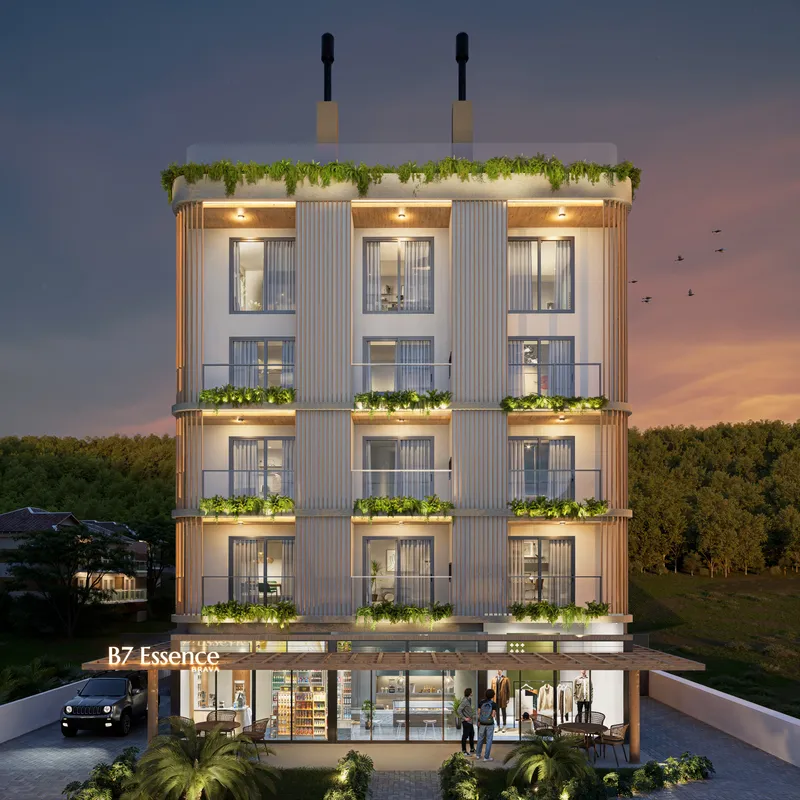
B7 Essence Brava
Praia Brava · Studios and lofts with a 10% down payment
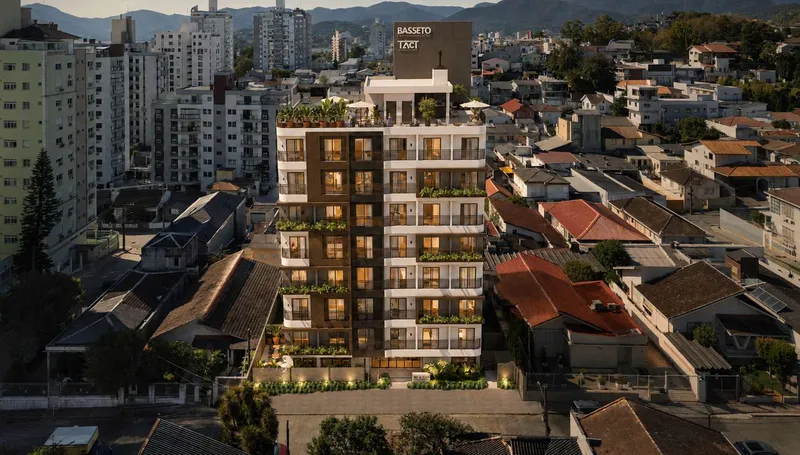
B7 Stay Agronômica
Agronômica · Studios and one-bedroom homes near Beira-Mar
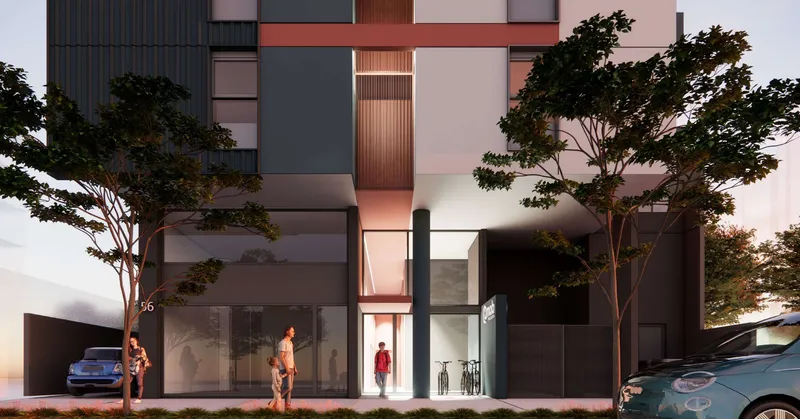
IMOB TRINDADE ON
Trindade · Studios with terraces and duplex lofts near UFSC

Apoena Studios Jurerê
Jurerê · Two studios available, 100 m from the sea
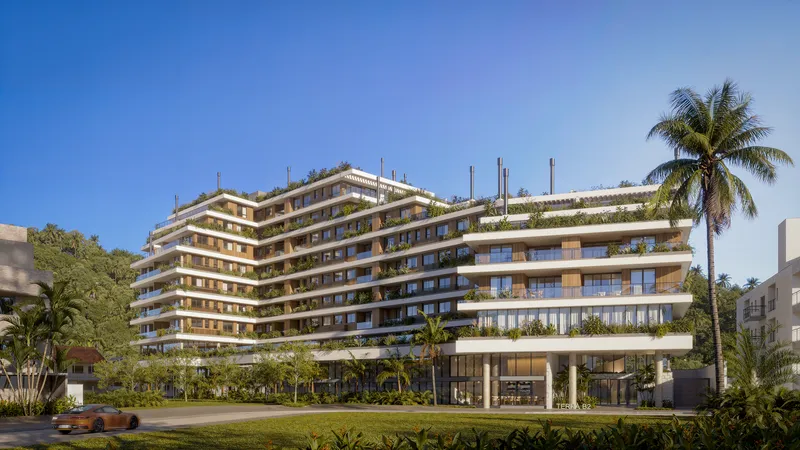
Terrá Jurerê
Jurerê · Wellness architecture and one-to-three-bedroom homes